
A new qualification announcement can leave parents wondering whether the advice they received at the last options evening is already out of date.
If your teenager is studying GCSEs now, the immediate message is straightforward: continue working towards their existing qualifications. The newly announced Vocational GCSEs are a future reform, and families should make present decisions using the courses their school actually offers.
For younger pupils, the plans are worth following. They could eventually broaden the choices available at age 14.
What has been announced?
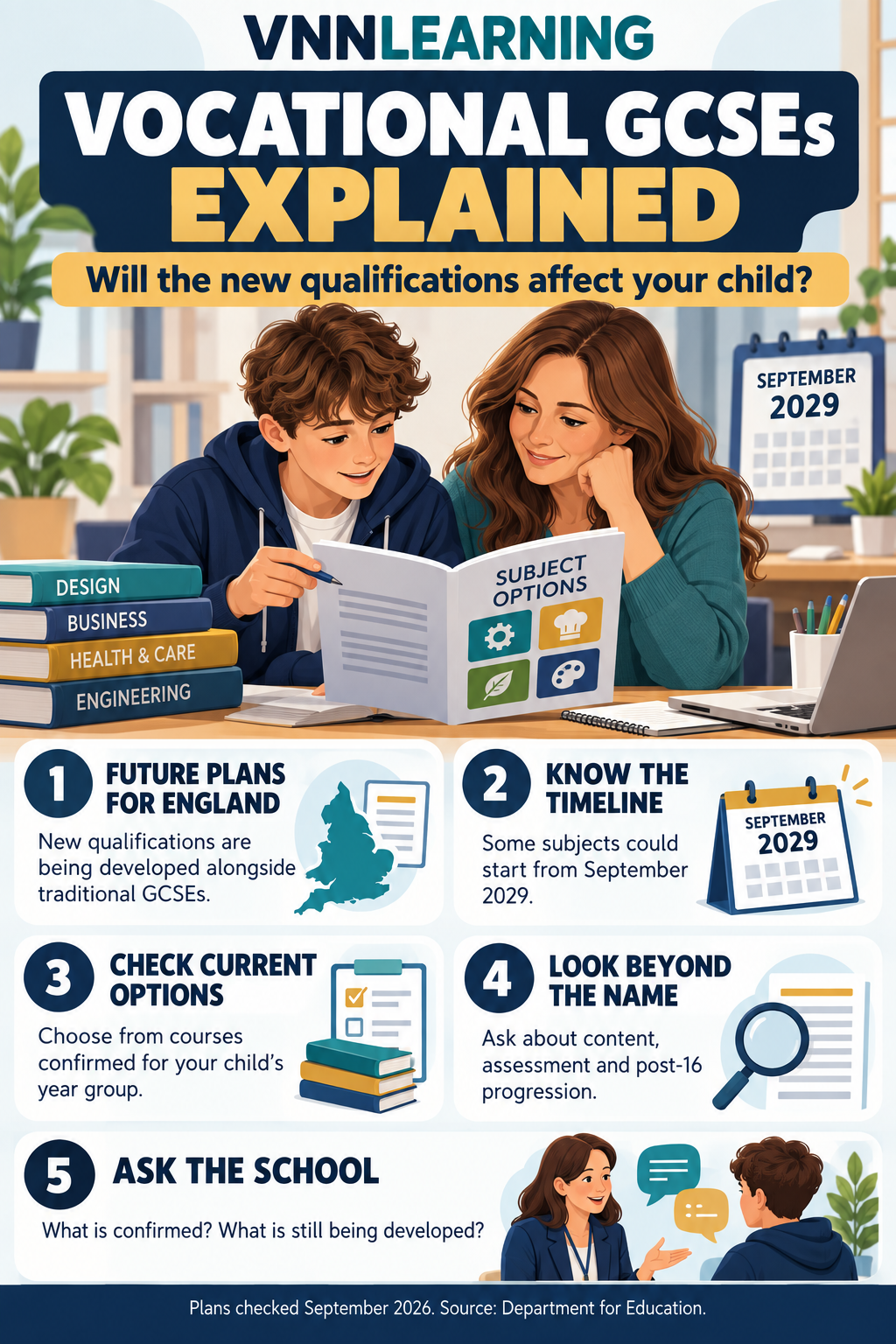
On 23 September 2026, the Department for Education announced plans for Vocational GCSEs in England. These would sit alongside traditional GCSEs and eventually replace Technical Awards.
The proposed qualifications would have nationally set content, with assessment and grading regulated by Ofqual. Possible subjects include digital technology, creative media production, child development, business management and finance, and building and construction.
Some subjects could become available as early as September 2029. Broader technical pathways are planned from September 2028, with a consultation on the qualifications expected later in 2026. These are development plans, rather than a complete set of courses that schools can offer today.
Education systems differ across the UK. Parents in Wales, Scotland and Northern Ireland should check the arrangements that apply locally.
What does this mean for your child?
The useful question is: "What will be available when my child chooses their subjects?"
If your teenager is already in Year 10 or 11, their priority remains understanding their current specifications, completing required work and preparing for assessments. A future announcement does not, by itself, change the course they are taking.
If your child will choose subjects before the proposed introduction, ask the school about its confirmed options. Avoid planning around a course that has not yet been approved or scheduled.
For younger pupils, keep an eye on school communications. Once qualifications and delivery arrangements are clearer, schools will be better placed to explain their intended provision.
Would a vocational subject suit your teenager?
Start with what your child enjoys doing and is willing to work at.
A teenager interested in digital media might enjoy analysing how a campaign reaches an audience. Someone interested in construction may be curious about materials, design and how buildings work. Those interests are useful starting points for a conversation.
However, an appealing subject name is only the beginning. Ask to see examples of the work involved.
Your child should understand how much reading, writing, calculation, practical activity and independent work a course requires. They should also understand how their achievement will be assessed.
Avoid assuming that a practical subject will automatically be easier. The right choice is one whose content, demands and progression opportunities fit the pupil.
Keep the next stage in view
Before committing to any subject, look at a few realistic post-16 options.
If your teenager has a particular A-level course, college programme or apprenticeship in mind, check the provider's current entry requirements. Ask directly where the wording is unclear.
For a pupil who has not chosen a career, aim for a manageable combination that reflects their strengths and keeps suitable next steps available. They do not need a lifelong career plan at 13 or 14.
Five questions for your next options conversation
Ask the school:
- Which qualifications will definitely be available to my child's year group?
- What will pupils study and produce on each course?
- How will the work be assessed?
- Which local post-16 courses accept the qualification?
- When will you communicate any confirmed changes?
Write down the answers, especially where a course is still under discussion.
What parents can do now
Keep helping your child build confidence in their current subjects. Talk about interests without forcing an early career decision, and use actual course information when comparing options.
A new qualification can create opportunities, but your teenager still needs the same foundations: understanding, steady effort and reliable advice.
At VNN Learning, our focus is helping pupils strengthen their understanding and approach their next educational step with confidence. If you would like to talk about your child's subjects or next steps, get in touch.
Official source: Department for Education announcement, 23 September 2026