Why Interactive Lessons Matter
When it comes to high school physics exam preparation, traditional revision methods — reading textbooks and highlighting notes — often fall short. Students perform significantly better when they truly understand concepts rather than simply memorising formulas.
Interactive lessons transform the learning experience from passive absorption to active engagement, helping students build mental models that stick.
The Problem with Passive Learning
Physics is fundamentally about understanding how the world works. Yet many students approach it as a subject to be memorised rather than understood. This leads to:
- Difficulty applying knowledge to unfamiliar exam questions
- Poor retention after the exam
- A lack of genuine interest in the subject
- Anxiety when faced with problem-solving questions
What Makes a Lesson "Interactive"?
An interactive physics lesson goes beyond simply watching a demonstration. It involves students actively participating in the learning process through:
Hands-On Experiments
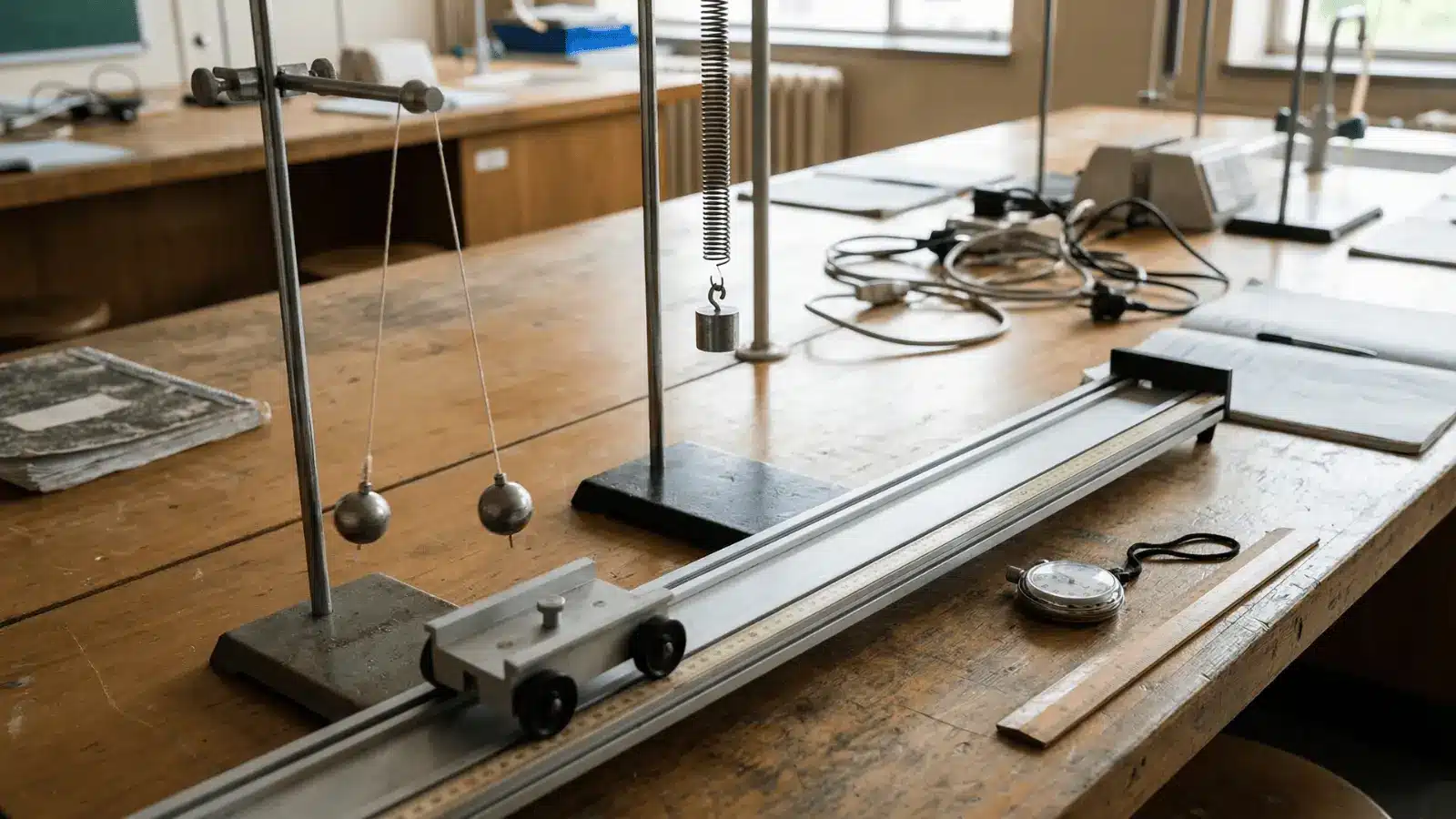
Even simple setups can be incredibly effective. Using a toy car and ramp to study acceleration, for example, allows students to:
- Predict what will happen before the experiment
- Observe the results in real time
- Connect their observations to the mathematical equations
- Discuss why the results may differ from predictions
Simulations and Virtual Labs
Platforms like PhET Interactive Simulations offer free virtual labs covering everything from circuits to waves. These tools allow students to manipulate variables and see immediate changes — perfect for concepts that are difficult to demonstrate physically.
Ranking Tasks and Conceptual Questions
Presenting students with scenarios that require conceptual thinking — such as ranking situations by net force — encourages deeper understanding beyond calculations. These types of questions mirror what students will face in exams.
Peer Teaching
Having students explain concepts to their classmates is one of the most powerful learning strategies. If a student can teach a concept clearly, they truly understand it.
Practical Tips for Parents
If your child is preparing for physics exams, here are some ways you can support interactive learning at home:
- Encourage questions about everyday physics — Why does a ball curve when kicked? How do noise-cancelling headphones work?
- Use online resources — YouTube channels like Veritasium and MinutePhysics make complex concepts accessible
- Practice with past papers — But focus on understanding the solutions, not just memorising them
- Consider a tutor — A skilled physics tutor can create personalised interactive lessons that target your child's specific areas of difficulty
Making It Work for Exam Prep
The key is to balance interactive exploration with structured exam preparation:
- Start with understanding — Use interactive methods to grasp core concepts
- Apply to exam questions — Practise applying that understanding to real exam problems
- Review and reflect — After each session, identify what was learned and what needs more work
- Build confidence — As understanding deepens, exam confidence naturally follows
How VNN Learning Can Help
Our physics tutors are experienced in creating engaging, interactive lessons that make complex concepts click. We combine hands-on learning with structured exam preparation to ensure students are both confident and well-prepared.
Whether your child is struggling with the basics or aiming for top grades, we tailor our approach to their specific needs and goals.
Want to give your child the best preparation for their physics exams? Book a free consultation to discuss how we can help.