Why Your Teenage Years Are the Best Time to Build Skills
Learning meaningful skills as a teenager sets you up for success in ways that go far beyond schoolwork. At this stage, picking up abilities like understanding AI, building solid problem-solving muscles, or mastering public speaking can open doors you might not have even noticed yet. These skills work for today and can keep you adaptable for whatever comes your way in the future.
The world is changing quickly, especially with things like artificial intelligence shaking up everything from jobs to schoolwork. Developing skills beyond textbooks can help bridge gaps, get you ready for a range of future options, and give your confidence a boost along the way.
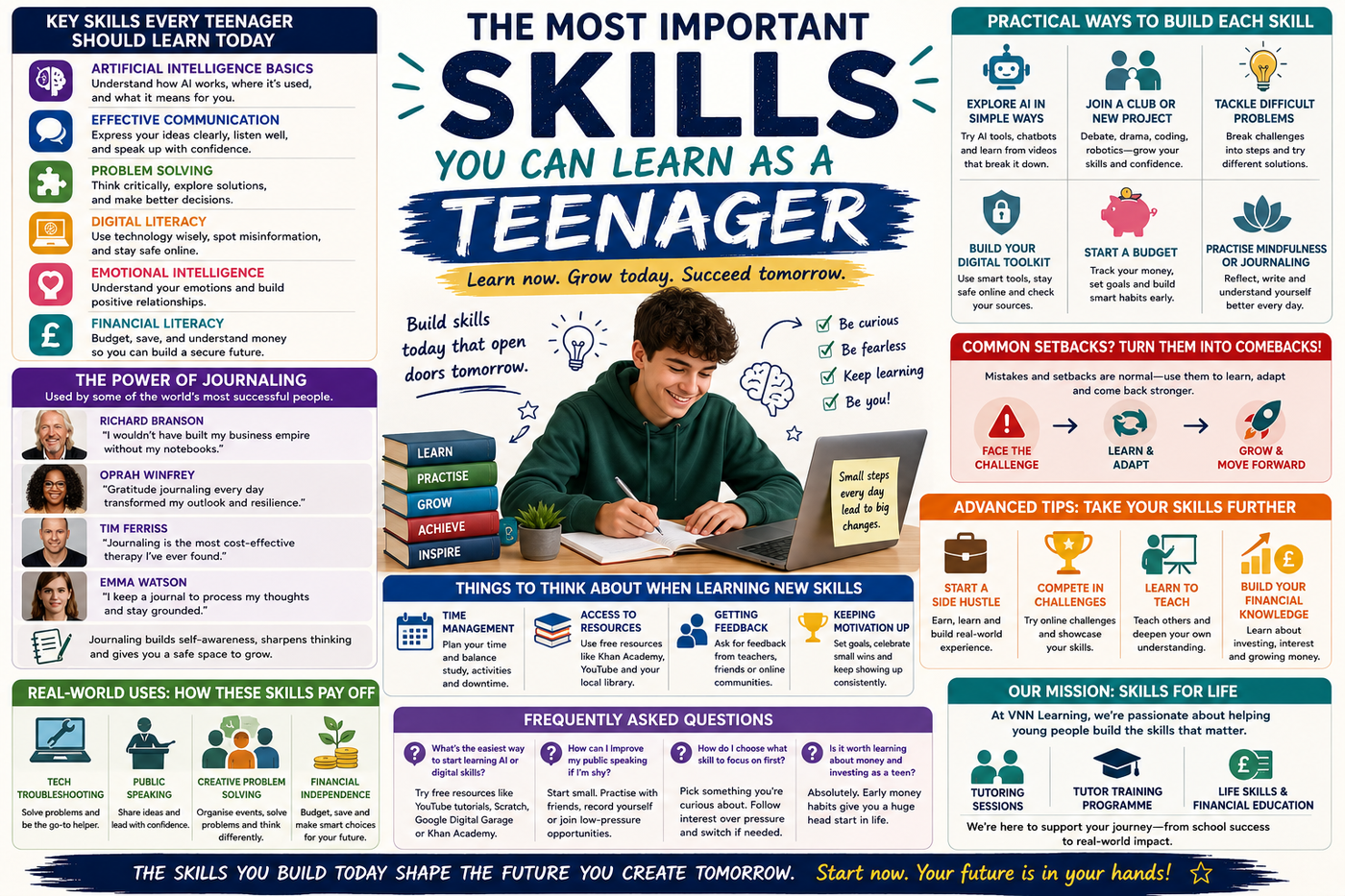
Key Skills Every Teenager Should Learn Today
Your school and teenage years are prime time to try things out, even if you stumble a bit along the way. Science, tech, social skills, or creative projects — there's no single path that fits everyone. But some skills stand out for helping you adapt, chase your goals, and have an easier time when challenges crop up.
Artificial Intelligence Basics
Learn how AI works, where it's used, and what it means for you. Worry less about coding straight away — start with how chatbots work, what digital assistants do, or how social media uses recommendations.
Effective Communication
Work on getting your point across, listening well, and speaking up when it counts. This covers everything from chatting with friends to delivering a class presentation.
Problem Solving
Practise thinking through different ways to fix an issue, whether it's a maths equation, a group project challenge, or working out how to save for something you want.
Digital Literacy
Understand how to use search engines, spot misinformation online, and keep your accounts secure.
Emotional Intelligence
Notice how you feel and why, and work out how to collaborate well with other people — even when they wind you up.
Financial Literacy
One of the most underrated skills a teenager can develop is an understanding of money. Budgeting your pocket money or part-time earnings, knowing the difference between saving and investing, and grasping the basics of personal finance gives you a massive head start in life.
Most schools don't teach this in enough depth, but even simple habits — tracking your spending, setting savings goals, or learning what compound interest means — can shape your financial future. It's part of VNN Learning's long-term vision to teach young people real-world skills like personal finance alongside their academic subjects.
Practical Ways to Build Each Skill
- Explore AI in Simple Ways: Try out free AI tools, like playing with a chatbot or using Canva's AI-powered design features. Check out YouTube for videos that explain AI with real-world examples instead of heavy tech talk.
- Join a Club or Try a New Project: Debate club, drama, robotics, coding, or book club — each one gives you new ways to present your ideas or work with a team.
- Tackle Difficult Problems: When something's tough (like learning a new topic or sorting out a disagreement with mates), don't shy away. Break it down into steps, brainstorm a couple of solutions, and give one a go.
- Build Your Digital Toolkit: Learn to use Google Workspace or Microsoft Office basics, and spend a little time on privacy settings and safe passwords. Get familiar with fact-checking sources, especially on social media.
- Start a Budget: Even if it's just tracking what you spend each week, getting into the habit of managing money early is one of the smartest things you can do. Apps like Monzo or Starling (both available to under-18s) make it easy.
- Practise Mindfulness or Journaling: Take five minutes a day to check in with yourself. Writing down what you're feeling, and why, can help you notice patterns and make improvements over time.
The Power of Journaling: An Elite Habit
Journaling might sound old-fashioned, but it's genuinely one of the most powerful habits you can build as a teenager — and some of the most successful people in the world swear by it.
Richard Branson, founder of Virgin Group, has said he wouldn't have built his business empire without his notebooks. He carries one everywhere and credits journaling with helping him capture ideas, solve problems, and stay focused on what matters.
Oprah Winfrey has kept a gratitude journal for decades, writing down five things she's thankful for every single day. She's spoken extensively about how this simple habit transformed her outlook and resilience.
Tim Ferriss, author and entrepreneur, uses journaling as a daily practice to manage anxiety, plan his day, and reflect on what's working. He's described it as "the most cost-effective therapy I've ever found."
Emma Watson has spoken about keeping a journal to process her thoughts and experiences, helping her stay grounded amid the pressures of fame and activism.
What makes journaling so powerful? It builds self-awareness, sharpens your critical thinking, helps you track your progress, and gives you a safe space to work through challenges. For teenagers juggling schoolwork, friendships, and figuring out who they are, it's an incredibly valuable tool — and it costs nothing more than a pen and a notebook.
Things to Think About When Learning New Skills
It's easy to get excited about new skills, then hit some snags and lose interest. Here are a few things that help you keep going:
- Time Management: Juggling classes, activities, and downtime gets tricky fast. Use a planner or calendar app to block out study time, club meetings, or creative breaks.
- Access to Resources: Not everyone has the latest computer or extra cash for courses. Start with free resources like Khan Academy, YouTube, and your local library for books or open Wi-Fi.
- Getting Feedback: Ask teachers, friends, or online forums what you can improve. A fresh set of eyes can push you forward much faster.
- Keeping Motivation Up: Set small, achievable goals and celebrate when you hit them. Building any skill takes time, and you'll build more confidence as you go.
Learning from Setbacks
Getting stuck or making mistakes is normal and genuinely useful for getting better. Instead of backing off, treat each roadblock as a chance to work out a new angle, ask for advice, or just laugh it off and try something different. Everyone misses the mark sometimes — that's how progress happens.
Advanced Tips: Taking Things Further
If you feel comfortable with the basics, you can get into more advanced or real-world projects to sharpen your growth:
Start a Side Hustle
Use your skills to offer a service — things like creating presentations for local groups, tutoring younger students, or building a basic website for a small business. These projects teach time management, communication, and responsibility.
At VNN Learning, we actually offer our students the chance to become tutors with us. If you've excelled in a subject and want to gain experience, earn some money, and build your CV, tutoring younger students is a brilliant way to get started. It's a genuine side hustle that also deepens your own understanding — and it looks fantastic on university applications.
Compete in Online Challenges
Platforms like Kaggle host challenges, and even beginners can give these a try. Present your solution at a school event or as a video — this builds public speaking and project management skills fast.
Learn to Teach
When you show a friend or younger student how to use a new tool or crack a tricky problem, you push your own understanding to the next level. Teaching can boost your skills more than learning solo.
Build Your Financial Knowledge
Once you've got the basics of budgeting down, explore concepts like investing, compound interest, and passive income. Resources like the Money Advice Service and Young Money (UK) offer free, age-appropriate content. Understanding how to make your money work for you — rather than just spending it — is one of the most valuable life skills you can develop.
Real-World Uses: How These Skills Pay Off
Checking out how teenagers actually use these skills helps you see the value beyond school:
- Tech Troubleshooting: Solving basic computer or phone problems makes you the go-to helper at home or in class.
- Public Speaking: Leading a team meeting or even sharing ideas in a group chat gets a lot easier.
- Creative Problem Solving: Running a fundraiser, managing a budget, or organising a club event all use creative thinking and digital skills at the same time.
- Financial Independence: Teenagers who learn to budget and save early find the transition to university or working life far less stressful.
Frequently Asked Questions
What's the easiest way to start learning AI or digital skills as a teenager? Try free online resources, such as tutorials on YouTube or interactive apps like Scratch for coding. Google's Digital Garage and the Khan Academy Computer Science section are both beginner-friendly options.
How can I improve my public speaking if I'm shy? Start small. Practise with a close friend or record yourself speaking on your phone and watch it back. Look for low-pressure opportunities to share in class or school clubs — confidence usually improves with practice.
How do I choose what skill to focus on first? Pick something you're curious about, even if you're not sure you'll be brilliant at it. Follow interest over pressure, and switch if you get bored or want to try something new. Skills build up over time and nothing's wasted.
Is it really worth learning about money and investing as a teenager? Absolutely. The earlier you understand how money works, the better decisions you'll make. Even basic budgeting skills at 15 put you years ahead of most adults when it comes to financial confidence.
The Bottom Line
Chasing after skills like AI understanding, sharp problem solving, strong communication, and financial literacy puts you in a strong position for school, work, and life in general. Whether you're learning to spot misinformation, preparing for interviews, teaching yourself a new app, or building a budget for the first time, you're setting up a toolkit that can carry you wherever you want to go.
At VNN Learning, we're passionate about helping young people develop not just academic knowledge, but the broader skills that lead to real-world success. Whether it's through our tutoring sessions, our tutor training programme for students, or our growing focus on life skills like personal finance — we're here to support your journey.
Interested in developing your skills with VNN Learning? Get in touch to find out how we can help.