What Does Being "Good at Maths" Really Mean?
Maths has a reputation for being tricky, and we get a lot of questions from both parents and students about whether anyone can actually get good at it. There's this old belief that some people just aren't "maths people," but current research and teaching experience paint a very different picture. With the right guidance, approach, and mindset, just about anyone can make real progress in maths — and even come to enjoy it.
Most people think being good at maths means finding every answer quickly and never making mistakes. In reality, it looks a bit different. Maths skill is the ability to approach a problem, work through it step by step, and bounce back when you hit a snag. It's about problem-solving, being patient, and staying curious. Talent helps, but practice and the right mindset matter a lot more than raw natural ability.
When parents ask about their children's potential, we usually point out that maths is a skill, not a magical gift. Just like playing the piano or learning a new language, improvement comes from effort, smart practice, and encouragement.
Why Do People Think Only Some People Can Do Maths?
It's easy to see where the myths come from. Films and books love to show maths geniuses as rare and mysterious. Many adults remember struggling at school, especially if they didn't have much support. Plenty of us were told things like "I'm just not a maths person," and we turned those statements into beliefs about ourselves.
These beliefs can stick around, holding back both children and adults from giving maths a real shot. But research actually shows that our brains can adapt and grow, even with things like complex maths. It's not set in stone — your ability can change with practice and good habits.
Maths Anxiety: Breaking the Cycle
One of the biggest barriers to progress in maths is anxiety. Many students — and their parents — worry that nervousness about maths means there's little hope. But this is far more common than people realise, and it can absolutely be overcome.
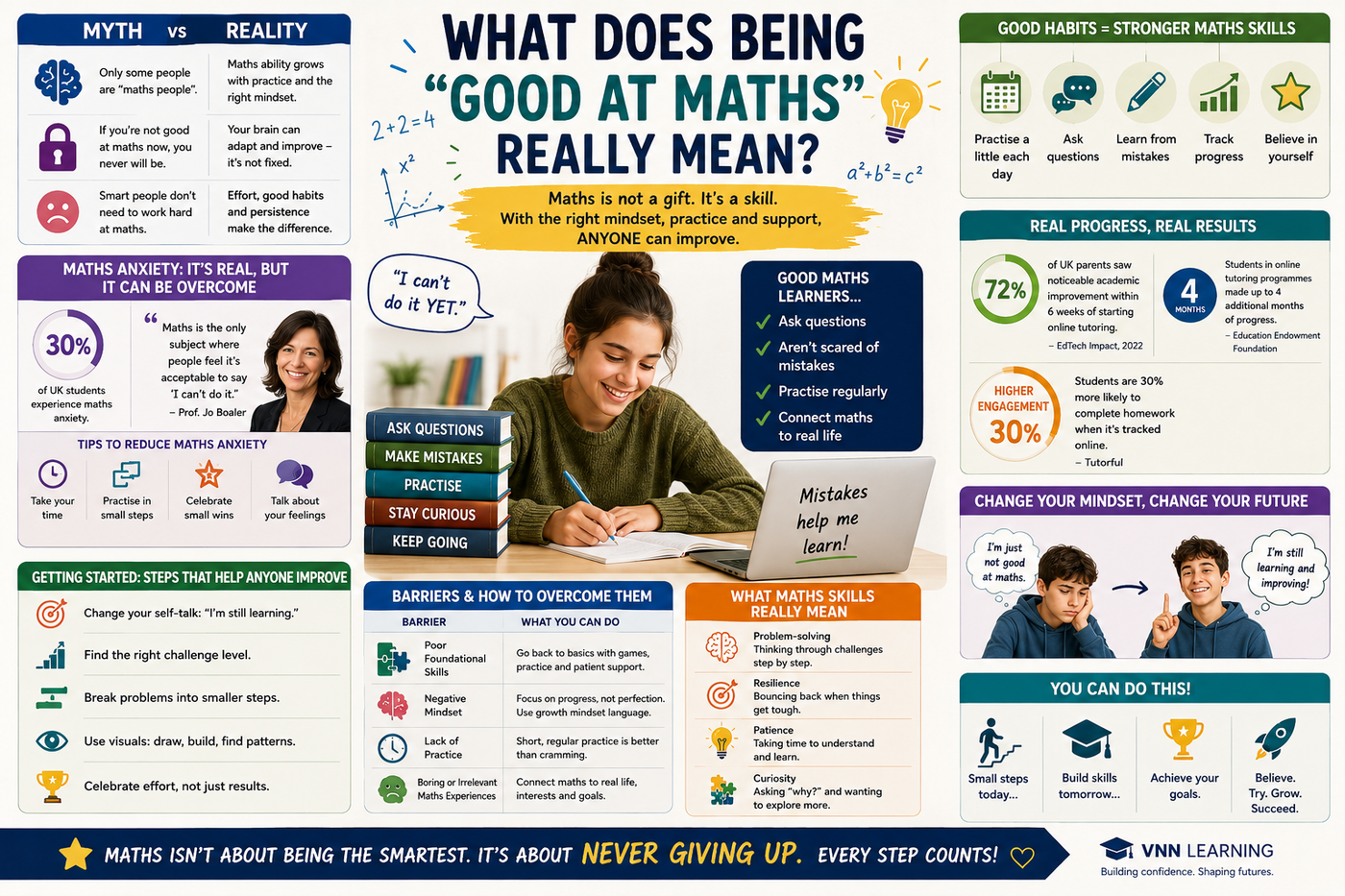
Stanford professor Jo Boaler, one of the world's leading researchers on mathematics education, has written extensively about this. She argues that maths anxiety is not a reflection of ability — it's a learned response, often passed down from parents or triggered by timed tests and high-pressure classroom environments. As she puts it: "Maths is the only subject where people feel it's acceptable to say 'I can't do it.'" Her research shows that when students shift from a fixed mindset to a growth mindset about maths, their performance improves significantly.
Studies have shown that maths anxiety affects up to 30% of students in the UK, and it's often rooted in negative early experiences. The good news? Small, consistent wins — reducing timer pressure, working through practice questions together, and talking openly about nerves — can start chipping away at anxiety remarkably quickly.
At VNN Learning, we take maths anxiety seriously. Our tutors are trained to spot it early and create a safe, encouraging environment where students can work at their own pace without judgement. Open conversations show students they're not alone and that it's absolutely fine to take their time. Every learner is unique, and it's crucial to break the cycle of fear by acknowledging and working with anxieties, not just pushing them aside.
What Skills Do Good Maths Learners Share?
We've worked with students of all skill levels, and the ones who end up doing well in maths often have a few habits in common:
- They ask questions. Instead of memorising steps, they wonder why methods work and how to use them in different situations.
- They aren't scared of mistakes. They see mistakes as part of learning — something to look at and fix rather than a reason to give up.
- They practise regularly. Like any other skill, steady practice makes a big difference.
- They connect maths to real life. They spot how maths links up with planning, games, art, and all sorts of everyday activities.
Learning these habits takes time, but anyone can build them with patience and support. Even taking small steps — like working through a tough problem or asking a question in class — can really lay the foundation for improved understanding.
Getting Started: Steps That Help Anyone Improve
Feeling stuck in maths doesn't mean the door is closed. There are some practical things anyone — parent or student — can do to start making maths easier and build real confidence.
- Change how you talk about maths. Try swapping statements like "I'm not good at maths" for "I'm still learning maths." This simple switch in self-talk can help both students and their parents stay open to learning.
- Find the right challenge level. If work is too easy, boredom kicks in. If it's far too hard, frustration wins. Start with maths that feels achievable, then gently increase the difficulty as confidence grows.
- Break things into steps. When maths problems feel overwhelming, break them down into smaller pieces. Writing out each step can really help make the logic clearer.
- Get visual when you can. Many students find numbers less intimidating when they use visuals — drawing, using blocks, or finding patterns. Visuals make abstract ideas feel more concrete.
- Celebrate effort, not just results. Notice and praise the work someone puts into solving maths problems, not just the final answer.
Consistent practice and positive reinforcement are key, and making maths a small daily habit can really pay off in the long run.
Barriers That Hold Students Back (And How to Get Past Them)
Each learner faces unique barriers, but some struggles crop up time and again:
- Poor Foundational Skills: If a student missed key concepts early on — like times tables or fractions — it gets harder to grasp new material. It's worth going back and shoring up those basics with engaging games or targeted practice.
- Uninspiring Lessons: Lessons that don't connect to real life or don't explain the "why" behind methods lose students fast. Bringing in puzzles, stories, or real-world examples keeps things lively and meaningful.
- The Comparison Trap: It's easy for students to feel discouraged if they compare themselves to classmates who work faster. Remind them that improvement is personal and that steady progress — not speed — is the real goal.
Rebuilding the Basics
If skill gaps exist, using apps, maths games, or just spending 10 minutes a day on core concepts like multiplication can make future learning a lot smoother. Try using flashcards, working real-world problems into daily routines, or even singing maths songs to revisit important foundations in a fun way.
Advanced Maths Habits for Growing Confidence
As skills build, there are ways to push even further and make maths something to look forward to:
- Play With Patterns: Looking for patterns and connections is a hugely useful skill that goes beyond plain memorisation. Spotting similarities and differences helps unlock tougher problems later on.
- Ask "What If?" Questions: Why not try tweaking problems? If 2+3=5, what happens with 20+30? This keeps things playful and builds flexibility.
- Teach Others: Explaining maths to a friend, parent, or even just a pet helps things stick and highlights areas that still feel unclear.
- Keep a Maths Journal: Writing about steps you took, new terms you learnt, or tricky problems you solved promotes reflection and long-term retention. Plus, it makes tracking your progress easy!
Practical Examples From Everyday Life
Maths shows up just about everywhere. Using real-life activities helps students spot maths in action, which builds both confidence and a sense of purpose:
- Cooking: Measuring, doubling recipes, and timing all lean on maths.
- Sport: Calculating scores, averages, or distances during games sneaks maths into fun and active spaces.
- Shopping: Working out sale prices and making change builds mental maths in everyday routines.
- Board Games: Strategy and counting in games like Monopoly, chess, or Yahtzee all flex maths muscles.
- Gardening: Calculating planting distances, estimating soil needed, or tracking plant growth taps into measurement and planning skills.
Building maths confidence outside the classroom makes classroom success more likely, too.
Building a Supportive Maths Environment at Home
Parents can make a real difference just by keeping the mood around maths light and encouraging:
- Talk about maths in positive, everyday terms and point out where it appears in life.
- Notice and praise hard work, not just right answers.
- Show patience when things are tough, and remind your child that struggle is a normal part of learning.
- Use games and activities that make maths social and a bit playful — maths-based card games or puzzles work brilliantly.
- Let children see you using maths confidently or even figuring something out together.
How VNN Learning Can Help
At VNN Learning, we believe maths ability isn't fixed — it's a skill that anyone can strengthen. Our personalised approach means we meet each student where they are, identify their specific needs, and create a tailored plan to help them build confidence and achieve their goals.
Whether your child is dealing with maths anxiety, has gaps in foundational knowledge, or simply wants to push for top grades, our experienced tutors create a supportive, encouraging environment where real progress happens.
We've seen students go from dreading maths lessons to genuinely enjoying them — and their results reflect this transformation.
Ready to help your child discover their potential in maths? Get in touch for a free, no-obligation consultation.